A Reliable Standard for Academic
and Professional English Proficiency

The WORLD ENGLISH LANGUAGE LEVEL TEST (WELLT)
A Reliable Standard for Academic
and Professional English Proficiency
A Reliable Standard for Academic
and Professional English Proficiency
In a globalized world where the ability to communicate effectively in English is an essential prerequisite for academic success, professional development, and international mobility, the WORLD ENGLISH LANGUAGE LEVEL TEST (WELLT) provides a rigorous, evidence-based assessment of an individual's language competence. Designed by a consortium of linguistic experts and academic institutions, WELLT addresses the growing demand for transparent and adaptive language placement tools across educational and professional settings.
Purpose and Scope
Purpose and Scope
The WELLT was developed with the primary aim of offering a precise and objective evaluation of a candidate’s English language proficiency. It serves as a placement and diagnostic tool for:
The test measures communicative competence across reading, listening, and language systems, with optional speaking and writing components available upon request or institutional requirement.
Academic Applications
Academic Applications
Universities and colleges around the world increasingly rely on WELLT as part of their admissions, orientation, or academic preparation processes. The adaptive structure of the test ensures that each test-taker receives tasks aligned with their language range, thus increasing both accuracy and efficiency in placement decisions.
Institutions benefit from:
Furthermore, WELLT supports institutions that offer English-Medium Instruction (EMI) by identifying students’ preparedness for linguistically demanding coursework.
Professional Relevance
Professional Relevance
In occupational contexts, WELLT contributes to fair and transparent hiring, licensing, and training processes, particularly in fields where communication in English is safety-critical or ethically mandated. Examples include healthcare, engineering, law, international business, aviation, and public service.
Employers and regulators appreciate WELLT for its:
Key Features
Key Features
A Trusted Tool for a Changing World
A Trusted Tool for a Changing World
As English continues to function as a global lingua franca across academia, industry, and civil society, tools like WELLT become essential for ensuring that access to opportunity is based on merit, readiness, and clear standards. Whether you are a university dean seeking reliable placement solutions, a recruiter evaluating international candidates, or an applicant preparing for an academic journey – WELLT offers the precision, professionalism, and pedagogical integrity you can rely on.
The WELL online - represents a fast, reliable, and truly accessible way to assess English proficiency. Its adaptive and fully digital design makes language testing not only more convenient, but also more accurate and inclusive. For many candidates, WELL online becomes a key step toward pursuing higher education opportunities around the world — offering a seamless, modern alternative to traditional exams.
Dr. Zbigniew Wolynka
Director of Academic Programs EIAL

WORLD ENGLISH LANGUAGE LEVEL TEST
Open Access, True Insight – The Power of WELLT
At WELLT, we believe that access to language assessment should be as inclusive, fair, and forward-thinking as the global world it serves. That is why the WORLD ENGLISH LANGUAGE LEVEL TEST (WELLT) is open to everyone, regardless of age, nationality, educational background, professional experience, or personal goals.
Whether you are a high school student preparing for international studies, a mid-career professional exploring work abroad, or simply someone seeking to understand your current level of English – WELLT is designed with you in mind.
A Test Built for the 21st Century
Unlike traditional language exams, WELLT is a fully digital solution, purpose-built for today’s dynamic and distributed world. There is no need to travel to a test centre, no paper forms to complete, and no rigid schedules to follow. Test-takers can complete WELLT entirely online, from the comfort and privacy of their own environment – securely, efficiently, and with full confidence in the test’s integrity.
Advanced Digital Integrity
Our test goes far beyond simple question-and-answer formats. WELLT incorporates proprietary technology for real-time verification and behavioral monitoring, making it one of the most secure online language assessments available today.
Among our core innovations:
These mechanisms work together to preserve the validity and trustworthiness of every WELLT result – ensuring that what your score reflects is your true ability, and nothing less.
No Barriers, Just Opportunity
WELLT is built on the principle that language assessment should empower, not exclude. That is why there are:
We believe that when you provide access, support, and the right technology, people thrive. And WELLT is proud to be part of that journey.
Your Future, Measured Fairly
In today’s interconnected world, language is more than a skill – it is a bridge to new opportunities. With WELLT, you are not just taking a test – you are taking a step toward your personal and professional goals, backed by a system designed for fairness, transparency, and academic excellence.
Discover your level.
Confirm your strengths.
Open the door to what comes next – with WELLT.
To ensure a smooth and successful test experience,
please make sure the following elements are in place before you begin your WELLT session:
Device Requirements
Internet Connection
Camera, Microphone and Audio
Quiet and Private Environment
Valid Identification Document
Test Platform Access
Important: Attempting to cheat or manipulate the test environment will result in invalidation of results.
WELLT uses advanced proctoring and monitoring technology to ensure fairness for all test-takers.
A Vision Born from Purpose. A System Built on Trust.
The story of WELLT began in 2014, with the creation of a brand dedicated to enhancing human potential through inclusive access to learning, qualification, and lifelong development. From its very beginning, our mission has been to strengthen social capital by empowering individuals with the tools to succeed – educationally, socially, and economically.
We set out to build more than just a test. We envisioned a platform that would support:
Today, WELLT is a registered trademark, protected under international intellectual property law – a symbol of trust, rigor, and innovation.
From local projects to international partnerships, from individual test-takers to institutional partners –
WELLT is more than a product.
It’s a commitment to access, fairness, and lifelong learning.
A Comprehensive Language Proficiency Structure Based on CEFR
The WELLT assessment system is grounded in the Common European Framework of Reference for Languages (CEFR) – the globally recognized standard for describing language ability. To ensure clarity and precision, our framework evaluates each candidate across five essential language domains:
Each level from A1 to C2 is defined by progressively complex linguistic, cognitive, and communicative abilities.
Below is a detailed description of the expected competences per level and domain.
A1
Beginner
A1 – Beginner
Use of English:
Understands and uses basic vocabulary and simple sentence structures (e.g., present tense, common verbs, basic adjectives).
Reading:
Can recognize familiar names, words, and very simple sentences (e.g., on signs or in short messages).
Writing:
Can write simple phrases and short sentences about personal details (e.g., name, nationality, likes/dislikes).
Listening:
Can understand slow, clearly articulated speech with long pauses and repetition (e.g., greetings, instructions).
Speaking:
Can use simple expressions to introduce themselves and answer basic personal questions.
A2
Elementary
A2 – Elementary
Use of English:
Manages simple grammatical structures (e.g., past tense, questions, prepositions); has a limited but growing vocabulary.
Reading:
Understands short texts such as emails, menus, schedules, or notices with common vocabulary.
Writing:
Can write brief messages and notes relating to matters of immediate need.
Listening:
Understands everyday phrases and familiar topics when speech is slow and clear.
Speaking:
Can interact in basic conversations on familiar topics if the other person speaks slowly and clearly.
B1
Intermediate
B1 – Intermediate
Use of English:
Uses a range of grammatical structures with relative accuracy (e.g., conditionals, modals); vocabulary covers everyday topics.
Reading:
Can understand the main points in texts on familiar matters, including simple articles and reports.
Writing:
Can write coherent connected text on familiar topics or experiences (e.g., letters, simple essays).
Listening:
Understands main ideas in clear speech on familiar subjects (e.g., radio broadcasts, interviews).
Speaking:
Can participate in unprepared conversations on topics of personal interest or daily life.
B2
Upper Intermediate
B2 – Upper Intermediate
Use of English:
Demonstrates consistent control of complex structures and idiomatic language; vocabulary is wide and flexible.
Reading:
Can read and understand articles, reports, and literary texts with detailed argumentation.
Writing:
Writes clear, detailed text on a range of subjects, including expressing opinions and arguing for or against a point of view.
Listening:
Understands extended speech and lectures, including technical discussions related to their field.
Speaking:
Can engage in fluent conversation with native speakers on both concrete and abstract topics.
C1
Advanced
C1 – Advanced
Use of English:
Controls a broad range of structures and vocabulary with a high degree of precision; shows awareness of tone and register.
Reading:
Understands complex texts, including implicit meaning, rhetorical structure, and nuanced vocabulary.
Writing:
Produces well-structured, persuasive, and stylistically appropriate writing across various genres.
Listening:
Comprehends extended speech, even when it is not clearly structured or contains idiomatic expressions.
Speaking:
Expresses ideas fluently and spontaneously; uses language flexibly for social, academic, and professional purposes.
C2
Proficient
C2 – Proficient
Use of English:
Has near-native command of grammar and lexicon; can adapt style effortlessly to context and audience.
Reading:
Can understand virtually all types of written texts, including abstract, structurally complex, or highly literary content.
Writing:
Writes with elegance and sophistication across all genres; can construct arguments with clarity and subtlety.
Listening:
Understands any spoken language, even under adverse conditions or with unfamiliar accents.
Speaking:
Can express themselves precisely, even in the most nuanced and complex discussions.
With WELLT, proficiency is not estimated – it is demonstrated,
measured, and defined with clarity.

Join a Global Network of Trust
Across the world, institutions are choosing to recognize the WORLD ENGLISH LANGUAGE LEVEL TEST (WELLT) as a reliable, secure, and modern measure of English language proficiency. Whether you are a university, college, vocational school, language centre, recruitment agency, or professional licensing body – your organization can now become an official Receiving Institution within the WELLT system. By doing so, you gain verified access to candidate results, faster processing of language credentials, and a direct connection to our secure certification platform.

What Is a Receiving Institution?
A Receiving Institution is an organization that formally recognizes WELLT as a valid indicator of English language ability and uses WELLT results in its decision-making processes – for admissions, recruitment, licensing, qualification, or placement purposes.
Each registered institution receives access to a dedicated, secure account that allows authorized staff to:
How to Register as a Receiving Institution?
Becoming an official Receiving Institution is free and straightforward. Follow these steps:Why Institutions Trust WELLT
Ready to Register?
For assistance, please contact our institutional support team at: [email protected]
How to Recognize an Authentic WELLT Certificate
The WELLT certificate is more than a document — it is a verified record of achievement, backed by a secure system of authentication and global recognition. To maintain the highest standards of integrity, every official WELLT certificate includes multiple security features that protect against forgery and unauthorized reproduction.
Below are the key elements that make each WELLT certificate authentic and verifiable:
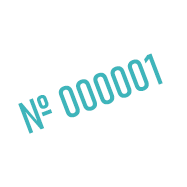
Unique Certificate Number
Each WELLT certificate contains a Unique Certificate Number — an individualized alphanumeric code printed clearly on the document.
This number is linked exclusively to the candidate who completed the test and serves as a direct reference in our official database.
How to use it:
Anyone (including institutions or employers) can use this number to confirm the authenticity of the certificate via the WELLT Verification Portal
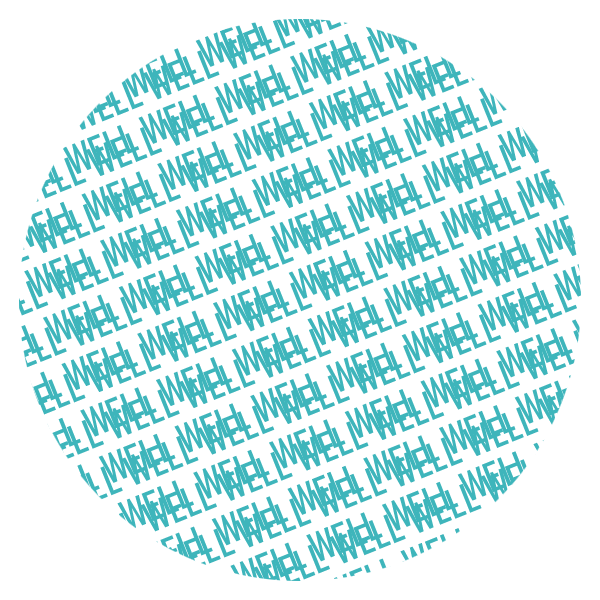
Microprint
All WELLT certificates feature a fine microprint line that includes the WELLT logo and name.
This line is extremely difficult to replicate and is only fully visible under magnification.
Why it matters:
Most counterfeit documents lack microprint or attempt to imitate it with low-quality, blurred text. This makes it easy to distinguish real certificates from fakes.
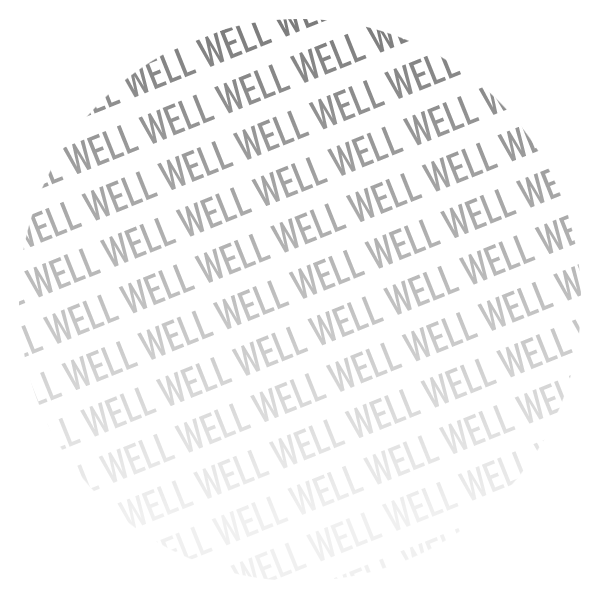
Shadow Mark
Each original certificate includes a shadow mark integrated into the design. This mark displays the WELLT logo and name and appears subtly in the background of the document.
What to look for:
The shadow mark is partially transparent, embedded into the design and visible under various lighting angles — a feature that is nearly impossible to recreate digitally.
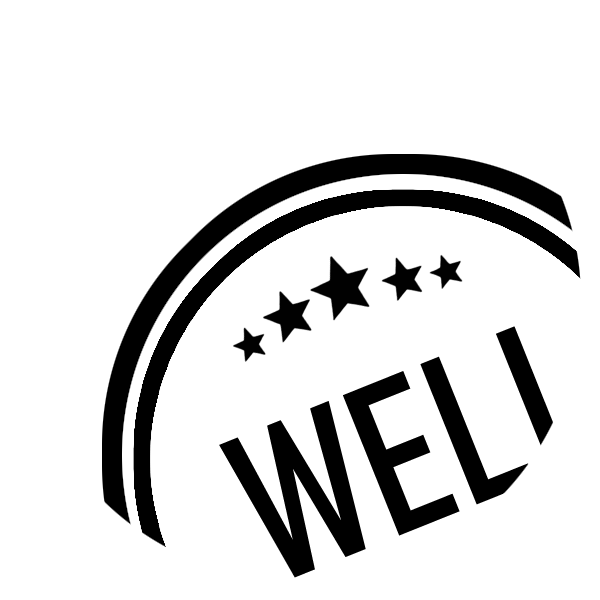
Embossed Seal
Every WELLT certificate also contains an embossed seal — a raised, tactile mark pressed directly into the paper surface.
This seal includes the WELLT symbol and serves as a physical proof of the certificate’s authenticity.
Why it matters:
The embossed seal cannot be scanned or printed — it must be physically applied and is easily recognized by touch.
(C) 2025. WELLT, the WELLT logos, and all related marks, names, and symbols appearing on this website are registered trademarks or trademarks of the WELLT owner and are protected under applicable trademark laws worldwide. You must not use, copy, reproduce, modify, distribute, republish, display, or communicate these trademarks in any form without the prior written permission of the rights holder. To request such permission, please contact the WELLT trademark owner at [email protected].
The language proficiency level labels used on this website refer to the Common European Framework of Reference for Languages (CEFR), established by the Council of Europe, and are provided for informational purposes only. Materials such as images, graphic symbols, or fonts are used under a license that permits both commercial and non-commercial use and are sourced from unsplash.com and flaticon.com.